Emergency Water Damage Restoration in Mission Viejo, CA
Wet carpet, soaked drywall or standing water after a leak, backup or burst line. Call any hour to start extraction and drying in Mission Viejo.
- 24/7 emergency calls
- Nights, weekends and holidays
- Mission Viejo, CA
The First Hours After Water Damage
Water damage restoration in Mission Viejo, CA is the work of removing standing water, drying the structure and stopping mold before it starts. Time matters because wet drywall, insulation and subfloor keep absorbing water long after the leak stops. Federal guidance from the EPA says that drying wet materials within 24 to 48 hours is the best way to prevent mold growth.
These steps are safe for most households while you wait for help.
- Stop the source if you can. Shut the valve at the fixture or the main water valve for the house.
- Stay out of any room where water is near outlets, power strips or appliances. Shut off the breaker for that area only if you can reach the panel without standing in water.
- Move small items, rugs and furniture legs off wet floors. Do not lift saturated carpet or heavy furniture on your own.
- Photograph everything before cleanup, including the source, the damage and the affected belongings.
- Do not use a household vacuum on standing water, and do not heat the room to dry it faster.
How Water Damage Is Classified
Professional restoration work follows a published standard, the IICRC S500, which classifies water by contamination level and by how much material it has soaked. Describing the standard here is not a claim of certification. It is the reference that insurers and restoration professionals commonly use, and understanding it helps you read an estimate.
| Category | Source | What it means |
|---|---|---|
| Category 1 | Broken supply line, tank leak, overflowing sink with clean water | Clean at the source, but can degrade within a day or two |
| Category 2 | Washing machine or dishwasher discharge, toilet overflow with urine only | Contains contaminants. Porous materials are often removed |
| Category 3 | Sewage backup, rising floodwater, long-standing standing water | Grossly contaminated. Affected porous materials are removed |
The second measure is the class of water damage, which describes how deeply and widely water has spread.
| Class | Typical situation | Drying demand |
|---|---|---|
| Class 1 | Small area, little absorbed | Slowest evaporation load |
| Class 2 | Whole room, carpet and pad wet, water wicked partway up the walls | Moderate. Needs air movement and dehumidifiers |
| Class 3 | Water from above that has soaked ceilings, walls, insulation and floors | High. Needs extensive drying equipment |
| Class 4 | Deep saturation of dense materials such as hardwood, plaster or concrete | Specialty drying over a longer period |
What the Restoration Process Involves
Inspect and map
A technician finds the source and uses moisture meters and thermal imaging to map where water has spread. Hidden pockets inside walls are common.
Extract and remove
Standing water is pumped or extracted first. Wet carpet pad, soaked insulation and drywall that cannot be dried are removed so they stop holding moisture.
Dry and monitor
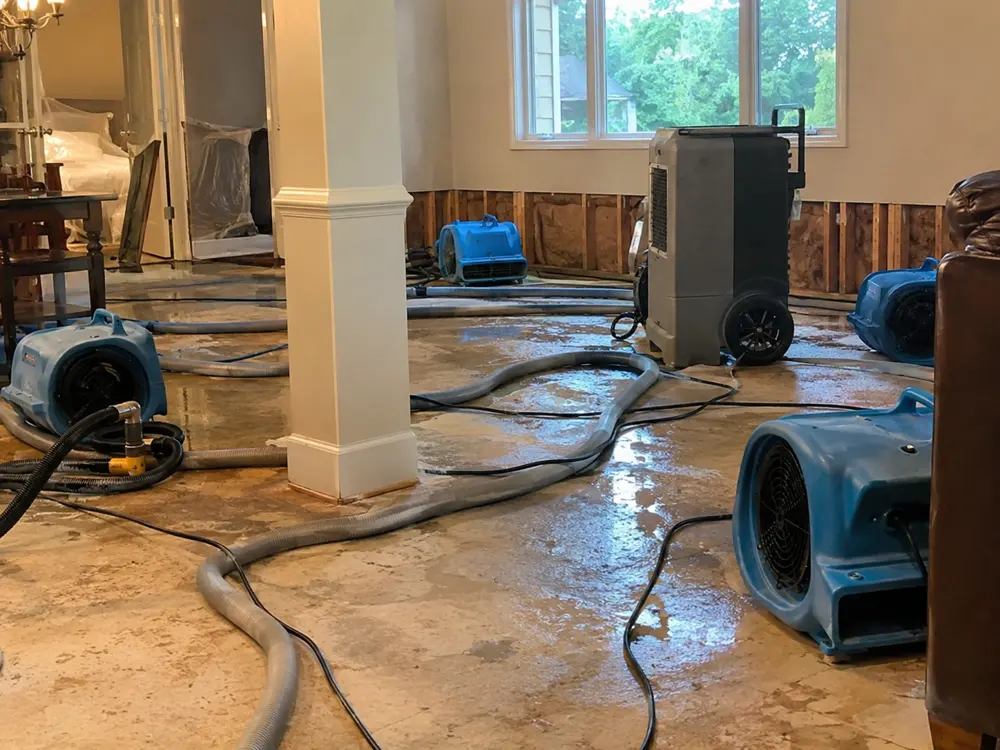
Air movers and dehumidifiers run until readings return to normal for the materials. The team checks moisture each visit, not by feel.
Drying is the longest part. Most jobs take several days of equipment running, and the exact time depends on materials, water class and how humid the house is. The job is finished when moisture readings show the structure is dry, not when the surfaces feel dry.
Where Water Damage Starts in Mission Viejo Homes
Most calls start with a plumbing failure. A water heater that fails in a garage or closet floods whatever sits below it. A supply line under a bathroom vanity can run for hours before anyone notices. A washing machine hose that splits floods a laundry room and wicks into the adjoining rooms.
Many homes in the area sit on concrete slabs. Water spreads across the flat surface and soaks baseboards, carpet pad and the bottom of the drywall before it finds a drain. Two-story homes add a second pattern. Water from an upstairs bathroom or a ceiling leak drops into walls and light fixtures below.
Orange County winters can bring roof and window leaks too. Water that enters from above often travels along framing before it shows up, so the visible stain is rarely where the leak began.
Fixing the pipe is plumbing work, and it is separate from restoration. A broken line is covered under pages such as water heater repair and leak detection in Mission Viejo. If a drain line is the source, see emergency drain cleaning. Restoration begins once the water is stopped.
Insurance, Documentation and What to Keep
Most homeowners policies cover water damage that is sudden and accidental, such as a burst pipe or a failed water heater. They usually exclude long-term seepage and rising floodwater. Flood damage generally needs a separate flood policy. Your own policy language governs, so read it or call your agent.
Policies also expect you to take reasonable steps to prevent further damage. That means stopping the water and starting drying promptly. Keep receipts, photographs and the moisture readings your restoration team records.
Do not throw away damaged items before they are documented. Adjusters often want to see them or at least see photos. Write down what was in the room and its approximate age.
What Water Damage Restoration Costs
- Size of the affected area. Larger areas need more equipment and more days of drying.
- Water category and class. Category 3 water and Class 3 or 4 damage cost more because more material must be removed and dried.
- Materials. Carpet and drywall are cheaper to dry or replace than hardwood or plaster.
- Equipment days. Air movers and dehumidifiers are usually billed per day of use.
- Contents. Furniture, electronics and belongings that need cleaning or removal add cost.
A good estimate lists the scope, the equipment and the expected drying time. If any line is unclear, ask for it to be explained before work begins.
Water on the floor right now?
Call the water damage line. Say what happened, where the water is and whether it is clean or from a drain.
Sources and Standards
Local figures and standards on this page come from these published sources.
Frequently Asked Questions
As soon as possible. The EPA advises drying wet materials within 24 to 48 hours to prevent mold. After that, mold risk grows and more materials may need to be replaced.
Yes. The water damage line is answered 24/7, including holidays. Describe the source and the affected rooms, and the next steps will be explained.
It depends on the water category. Carpet exposed to clean water can sometimes be dried in place if the pad is handled quickly. Carpet that touched sewage or floodwater is usually removed.
A plumber fixes the pipe, drain or appliance that released the water. Restoration removes the water, dries the structure and prevents mold. A burst pipe often needs both.
Sudden and accidental discharge is commonly covered. Gradual seepage and flood are commonly excluded. Your policy language decides, so ask your insurer before work starts.
A moisture meter shows readings in drywall, framing and flooring. Drying is complete when those readings match normal levels for the material. Touch alone is not reliable.
Water Damage? Call the Emergency Line
Call any hour for emergency water damage restoration in Mission Viejo. Describe the source and the rooms affected, and help will start from there.
Call (949) 998-2877