Annual Water Heater Maintenance Checklist for California
A tank heater runs every day and asks for very little. These five checks take under an hour and catch most problems early.
- 24/7 emergency calls
- Nights, weekends and holidays
- Mission Viejo, CA
Why a Yearly Check Is Worth the Hour
A tank water heater sits in a garage or closet and is easy to forget. It heats and holds dozens of gallons, so a small problem can turn into a flooded floor. A yearly check is the cheapest way to catch trouble before it spreads.
The U.S. EPA WaterSense program suggests hiring a professional once a year. It also lists a few steps a homeowner can do alone, including a visual inspection for leaks, aged gaskets, loose connections and corrosion. It says to flush the heater once a year to reduce sediment buildup, and to check the temperature and pressure relief valve annually.
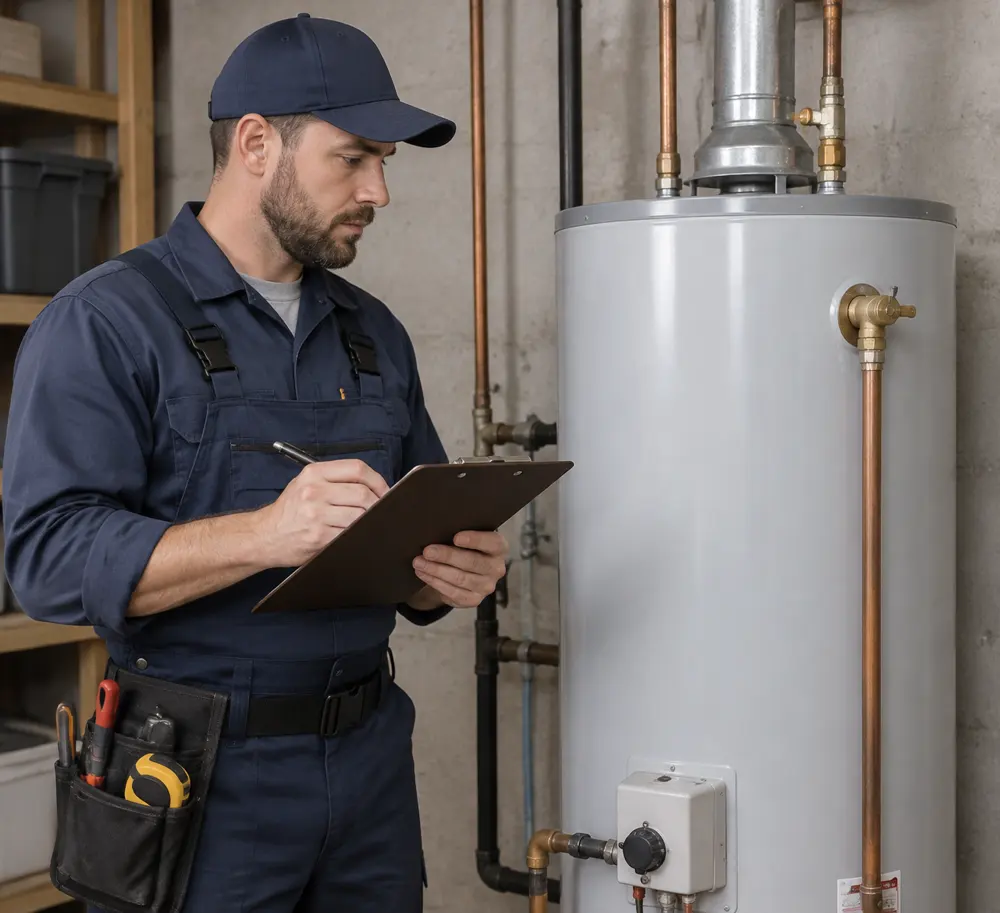
This guide turns those points into a checklist you can finish on a weekend morning. It is general information, and your heater's manual comes first. Stop and call a plumber if anything on the list looks wrong.
The Five Checks at a Glance
| Check | What to do | What a problem looks like |
|---|---|---|
| Look it over | Inspect the tank, pipes and floor for leaks, corrosion and loose fittings | Rust streaks, damp spots, mineral crust on fittings |
| Flush the tank | Drain some water from the bottom valve to carry out sediment | Cloudy or gritty water, rumbling sounds when heating |
| Test the relief valve | Lift the lever briefly and let it snap back | Valve drips afterward or will not move |
| Check the temperature | Compare the dial setting with the recommended limit | Water that scalds or a setting that is far too high |
| Confirm the bracing | Make sure the straps and flexible connectors are in place | Loose straps, rigid gas or water lines |
None of these steps needs special tools beyond a hose, a bucket and gloves. Keep the manual nearby, since valve locations differ between models.
Flushing the Tank Step by Step
The City of Anaheim describes the sediment inside a tank as very fine sand and mineral deposits. It says partial draining or flushing helps prevent scale buildup and helps extend the life of the tank. Its maintenance guidance suggests opening the drain valve near the bottom and draining a gallon or two to remove sediment.
Turn the heater off
Set a gas unit to pilot or off, or switch off the breaker for an electric unit. Never run a tank with the water level low.
Connect a hose
Attach a garden hose to the drain valve and run it to a floor drain or the driveway. Hot water can scald, so let the tank cool first.
Open the valve and a hot tap
Open the drain valve and a hot faucet upstairs so air can enter. Watch the water for grit or cloudy streaks.
Close up and refill
Close the drain valve, remove the hose and fill the tank before turning the power or gas back on.
If the valve will not shut fully or the water keeps dripping afterward, stop there. A worn drain valve is a quick part for a plumber to swap, and forcing it can make the leak worse.
Relief Valve and Temperature Setting
The temperature and pressure relief valve is a safety part that opens if the tank gets too hot or too full of pressure. Anaheim's guidance says to check it annually to be sure it works. Lift the lever a short way, let a little water run into the discharge pipe and let it spring back.
If it sticks, or if it keeps dripping afterward, the valve needs replacing. A relief valve that drips on its own can also point to high water pressure in the house. Our guide on checking home water pressure covers that test.
Anaheim also notes that a setting above 120 or 140 degrees wastes energy and raises the risk of scalding. Pick a setting that suits your household, and keep it lower where young children or older adults live.
Mistakes That Shorten a Heater's Life
- Skipping the flush for years, which lets sediment pile up on the bottom of the tank.
- Setting the temperature far higher than needed, which wastes energy and speeds up scale.
- Ignoring a dripping relief valve, since it can signal pressure trouble in the house.
- Blocking the space around the heater with boxes, which hides leaks and creates a fire risk near a gas unit.
- Leaving a small leak alone because the floor drain handles it.
Most of these habits cost nothing to fix. A heater that is looked at once a year gives you a chance to catch trouble early.
What to Write Down Each Year
Keep a short note taped near the heater or saved on your phone. Record the date of the flush, the temperature setting and what the water looked like. Note the model and the age of the tank, which is printed on the label.
That record helps a plumber decide whether a problem is new or old. It also helps you judge when a heater is nearing the end of its life. If you rent out the home, the same note helps the next tenant or owner.
Signs the Heater Needs More Than Maintenance
Maintenance extends a heater's life, but it cannot repair a failing tank. Watch for the signs below, which usually mean it is time for a professional look.
- Water pooling at the base of the tank, which can mean the tank itself has failed.
- Rusty or brown hot water while the cold water runs clear.
- Loud popping or rumbling that returns right after a flush.
- A heater that no longer keeps up with the household.
- Rust, soot or scorch marks around a gas burner area.
A leak from the tank is a replacement job, since a corroded shell cannot be patched. If the heater has quit or is leaking now, see emergency water heater repair. If it is simply old, water heater replacement in Mission Viejo explains the options.
Not sure what your heater is telling you?
Call and describe the age, the noises and any water on the floor. A plumber can tell you whether it needs a flush, a part or a replacement.
Sources and Standards
Local figures and standards on this page come from these published sources.
Common Questions
The EPA suggests once a year. Anaheim's guidance suggests partial draining more often. Your manual and your local water conditions decide the schedule.
Many homeowners do. You need a hose, a bucket and gloves. If the drain valve is plastic, stuck or leaking, ask a plumber to handle it.
It can be worn, or it can be reacting to high water pressure. Have a plumber check both before the valve fails.
Anaheim warns that settings above 120 or 140 degrees waste energy and raise the scald risk. Choose a level that fits your household and the manual.
When it leaks from the tank, rusts through or fails repeatedly. At that point replacement is usually the safer choice.
Need Your Water Heater Looked At?
Call any hour in Mission Viejo. Tell the plumber what you found and a visit can be set up.
Call (949) 998-2846